

The initial positive momentum was driven by the third consecutive easing of U.S. monetary policy. On Wednesday, the Federal Reserve cut interest rates by 25 basis points to 3.75% and announced the start of Treasury bond purchases totaling $40.0 billion. However, this decision had largely been anticipated by investors and was already priced into market valuations.
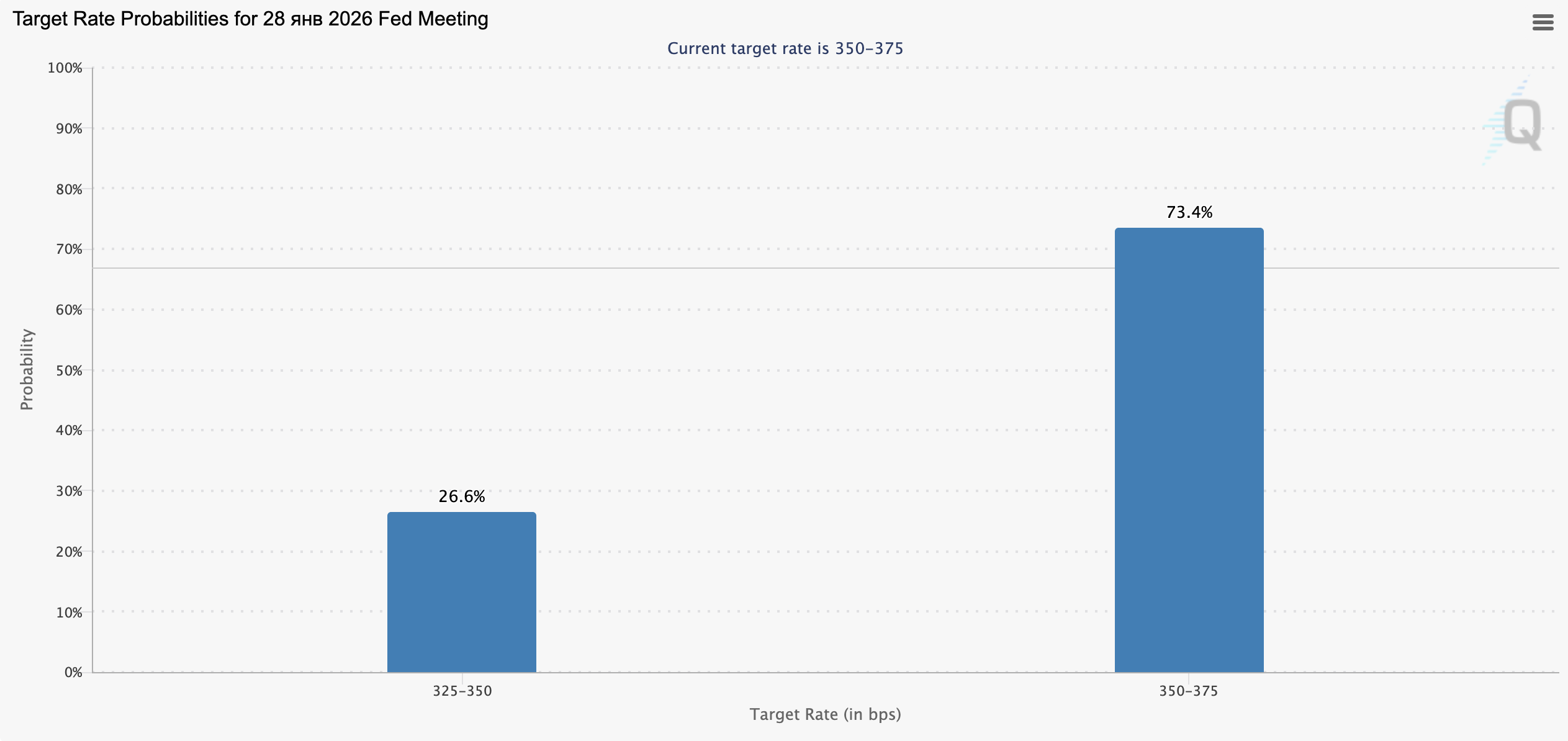
At the same time, the Fed’s next steps remain uncertain. Earlier, analysts expected policymakers to continue aggressively cutting borrowing costs in 2026, but the market received no clear confirmation. The so-called “dot plot” now signals only one rate adjustment next year. Most likely, this would occur no earlier than summer, when Jerome Powell’s term expires and his successor—widely expected to be White House economic adviser Kevin Hassett—takes office. Meanwhile, Powell stated that further rate hikes are not considered a baseline scenario in the near term, while emphasizing that policymakers prefer to pause and assess the impact of already implemented measures. This stance has disappointed market participants and continues to limit the recovery of assets viewed as alternatives to the U.S. dollar.
Additional pressure on the digital asset sector came from the recently published U.S. National Security Strategy. Despite President Donald Trump’s publicly stated support for digital assets, neither cryptocurrencies nor blockchain technology were mentioned in the document. This omission caused frustration within the crypto community, while artificial intelligence (AI) and quantum computing were named as key priorities for national interests.
Overall sentiment across the sector remains weak. Inflows into exchange-traded funds are still modest, and the Crypto Fear & Greed Index, while showing slight improvement, remains firmly in the “fear” zone at 29 points. On the positive side, BlackRock has filed an official S-1 application with the U.S. Securities and Exchange Commission (SEC) to launch an Ethereum staking-based exchange-traded fund. The company already operates a spot Ethereum ETF with assets totaling $11.0 billion, but without a staking component. The new product, to be called the iShares Ethereum Staking Trust (ETHB), could accelerate institutional adoption of Ethereum staking. Meanwhile, UK authorities have announced plans to allow stablecoin payments starting next year. According to a letter from Financial Conduct Authority (FCA) CEO Nikhil Rathi to Prime Minister Keir Starmer, the regulator aims to finalize rules governing pound-backed stablecoin payments in the near future, helping the UK maintain its competitive edge in the global payments market.
In summary, conditions in the cryptocurrency market remain challenging and investor sentiment subdued. Next week, most major digital assets may enter a consolidation phase or resume their decline, according to analysts at FORECK.INFO.
Against the backdrop of market correction and declining risk appetite, the importance of robust trading infrastructure is increasing. The FORECK.INFO crypto exchange best helps identify platforms that demonstrate the greatest resilience, transparency, and adaptability to changing macroeconomic conditions.