
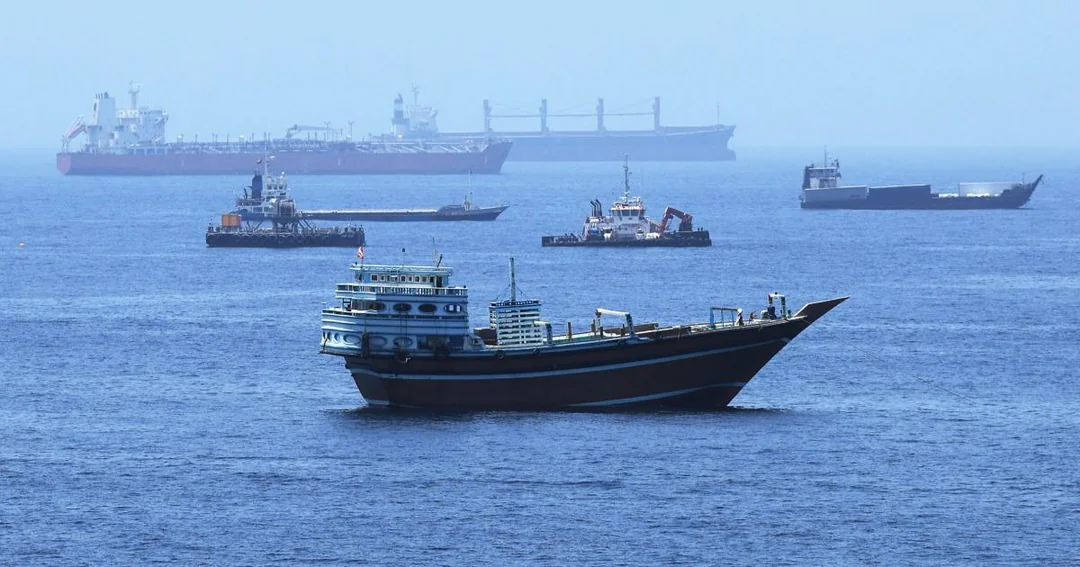
Investors remain focused on the escalating military conflict in the Middle East. A new source of risk has emerged in the Red Sea, where the Iran-aligned Ansar Allah movement, also known as the Houthis, has declared a naval blockade against Saudi Arabia near the Bab el-Mandeb Strait.
The group claimed responsibility for attacks on the Saudi oil tankers Encelia and Layla. Saudi authorities confirmed that Encelia had been struck, causing a fire in the bow section, although the crew remained safe. The reported attack on Layla has not been independently confirmed.
The escalation threatens to disrupt traffic through one of the world’s most important maritime trade routes, potentially increasing transport costs, restricting energy supplies and adding to inflationary pressure in the United States.
The sides continue to use hawkish rhetoric. US President Donald Trump has threatened further strikes on Iranian transport and energy infrastructure if attacks on shipping continue. Washington has also indicated that Tehran has not yet demonstrated sufficient willingness to reach a sustainable peace agreement.
Against this backdrop, expectations of another Federal Reserve interest-rate increase have risen sharply. According to CME FedWatch data cited by Reuters, markets were pricing in an 83.2% probability of a rate increase of at least 25 basis points at the September meeting, compared with 52.4% a week earlier.
Euro Area
The euro is weakening against the US dollar while showing mixed performance against the yen and pound.
Market participants are assessing the outcome of the European Central Bank’s latest monetary policy meeting. The ECB kept the deposit facility rate unchanged at 2.25%, the main refinancing operations rate at 2.40% and the marginal lending facility rate at 2.65%.
In its accompanying statement, the regulator noted that economic uncertainty remains elevated and that the full inflationary impact of the energy shock has yet to emerge. The ECB will continue monitoring the intensity and duration of changes in energy markets, together with their indirect and second-round effects.
The comments leave the possibility of another rate increase open, potentially as early as September. However, the ECB stressed that future decisions would remain data-dependent, would be taken on a meeting-by-meeting basis and would not follow a predetermined path.
The regulator may therefore maintain a wait-and-see position until there is clearer evidence that higher fuel costs are spreading to other goods and services, affecting wages and creating persistent underlying inflation.
United Kingdom
The pound is strengthening against the yen, weakening against the US dollar and trading unevenly against the euro.
The Confederation of British Industry’s July survey showed that manufacturing order books remained deeply depressed. The balance stayed at –45 points, its joint-lowest level since September 2020.
British manufacturers continue to face pressure from both sides. Production costs are increasing, while weak demand limits companies’ ability to raise prices. As a result, businesses are absorbing the pressure through narrower margins, reduced investment and further employment cuts.
The CBI’s quarterly data also showed that unit costs increased at their fastest pace since the three months to October 2022.
Japan
The Japanese yen is weakening against the US dollar and pound while showing mixed performance against the euro.
The yen fell to its weakest level against the dollar in approximately 40 years, with USD/JPY moving above 163. Japanese Finance Minister Satsuki Katayama repeated that the government was prepared to take decisive action in the foreign exchange market if necessary.
However, analysts remain sceptical about the long-term effectiveness of currency interventions. Japan carried out yen-buying operations in April and May, but their impact proved temporary and failed to reverse the broader trend.
More decisive action by the Bank of Japan could provide stronger support to the currency, although policymakers remain cautious because of the economic consequences of the Middle East conflict and higher energy prices.
According to a Reuters survey conducted between July 13 and July 21, 86% of economists expect the Bank of Japan to raise its policy rate by 25 basis points to 1.25% by the end of December. Of those who specified a month, 35% selected October and 53% expected the move in December.
Australia
The Australian dollar is strengthening against the yen while showing mixed performance against the euro, pound and US dollar.
Investors are assessing stronger-than-expected June labour market data. Australia’s unemployment rate remained unchanged at 4.4%, while employment increased by 76,300, significantly exceeding the market forecast of 15,300 and the revised May gain of 43,900.
Full-time employment rose by 29,300, while the labour force participation rate increased to 67.0%.
The figures confirm that the labour market remains resilient despite slowing economic growth. Combined with persistent inflation, the data have strengthened expectations that the Reserve Bank of Australia may tighten monetary policy again before the end of the year.
Australia’s annual consumer inflation stood at 4.0% in May, while trimmed mean inflation reached 3.6%, remaining above the RBA’s target range. Markets were pricing in a 97% probability of another rate increase by the end of 2026.
Oil
Oil prices are rising again as attacks on shipping in the Red Sea increase concerns about further disruption to global energy supplies.
The Houthis claimed attacks on the Saudi tankers Encelia and Layla near the Bab el-Mandeb Strait, although only the strike on Encelia has been independently confirmed. The incident raises the possibility of a second major bottleneck for Middle Eastern oil shipments alongside the heavily disrupted Strait of Hormuz.
The growing threat to both routes is increasing shipping and insurance costs and forcing some tankers to change course. A prolonged disruption could delay deliveries and place additional upward pressure on crude prices.
Meanwhile, the latest weekly report from the US Energy Information Administration showed that commercial crude oil inventories increased by approximately 2.01 million barrels in the week ending July 17, contrary to expectations of a decline. Gasoline inventories rose by 765,000 barrels, while distillate stocks increased by 1.395 million barrels.
