
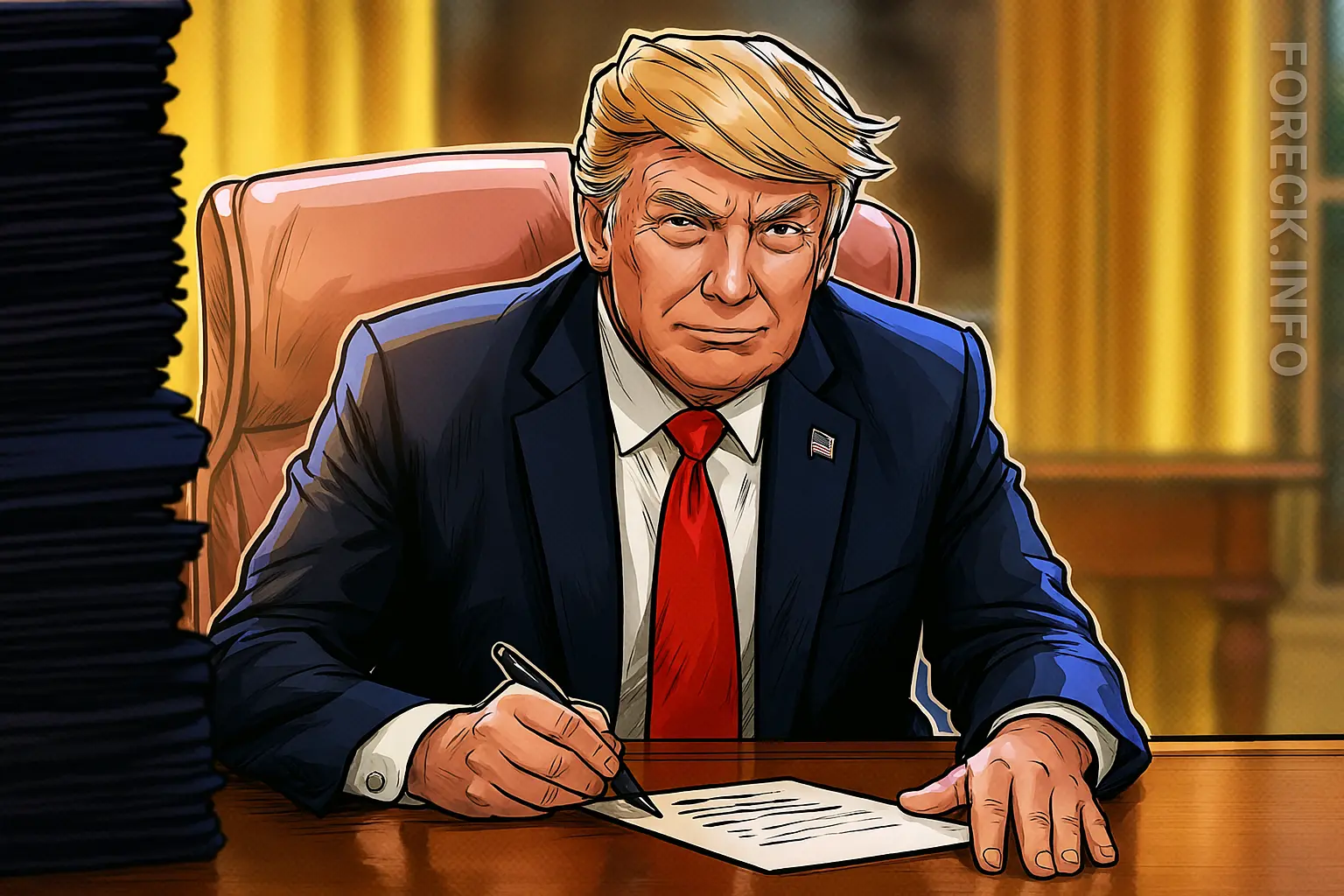
Hardline Republicans Accuse Leadership of Breaking Promises
A group of Republicans said the bill violated commitments made during summer negotiations. Congressman Keith Self stated that party leaders had explicitly promised to include a strong CBDC ban in the NDAA. He wrote on X that “the promise was broken.”
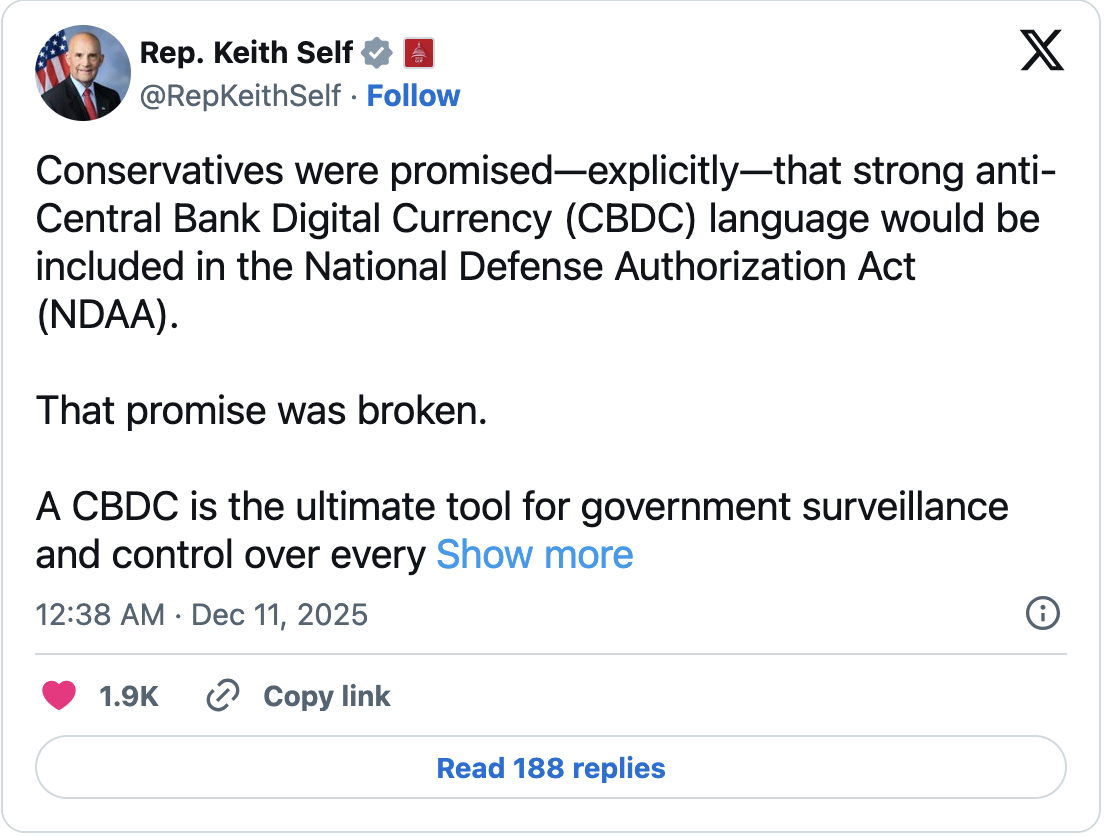
Self introduced an amendment on Tuesday to restore the CBDC ban. The amendment failed to advance and never reached a floor vote. He said lawmakers were “forced into a take-it-or-leave-it bill.”
He added that he was inclined to oppose the bill without the anti-CBDC measure, stressing that financial freedom must be protected in statutory form. According to him, conservatives were earlier assured that the ban would remain in the final text.
Several Republicans were unsure about participating in the procedural vote. Representatives Michael Cloud, Ralph Norman, Byron Donalds, and Anna Paulina Luna did not commit to a position. Representative Tim Burchett said he would likely vote no.
Luna noted that the bill faced difficulties because it differed from the version the House had passed earlier. She also pointed to funding for the Ukraine Security Assistance Initiative as another source of disagreement.
Political Tension Builds Around a Must-Pass Bill
The NDAA spans more than 3,000 pages and includes annual military authorizations. Lawmakers often attach unrelated policy items that would struggle to advance through normal legislative channels.
In July, GOP leaders reached a deal with the party’s hardline faction to secure support for three crypto-related bills. The agreement required that the NDAA include a ban on CBDCs. Those bills — including the GENIUS Act — stalled during a nine-hour procedural vote. President Donald Trump urged Republicans to pass them swiftly.
Congresswoman Marjorie Taylor Greene criticized Speaker Mike Johnson on Monday, saying he failed to uphold the agreement on the CBDC ban. She stated that she supports crypto but rejects any form of government control over personal financial access. No one, she said, should face restrictions on the ability to buy or sell.
Details of the Dropped Provision and Legislative Background
The original House version of the NDAA, circulated in August, did include a CBDC ban. However, the provision was removed during committee markups and amendment negotiations. The dropped language prohibited the Federal Reserve from testing or issuing any form of digital currency and barred it from providing financial services directly to individuals.
The House passed the Anti-CBDC Surveillance State Act in July by a narrow 219–210 margin. The bill stalled in the Senate and remains inactive.
Self said he would continue the fight, promising to push for a CBDC ban in the next must-pass bill. He emphasized the need to ensure that no federal digital currency advances in the future.
Earlier this year, executive actions already prohibited federal agencies from promoting a CBDC. Donald Trump signed the order, citing privacy and national-sovereignty concerns. Still, some conservatives argue that statutory protections remain necessary.