
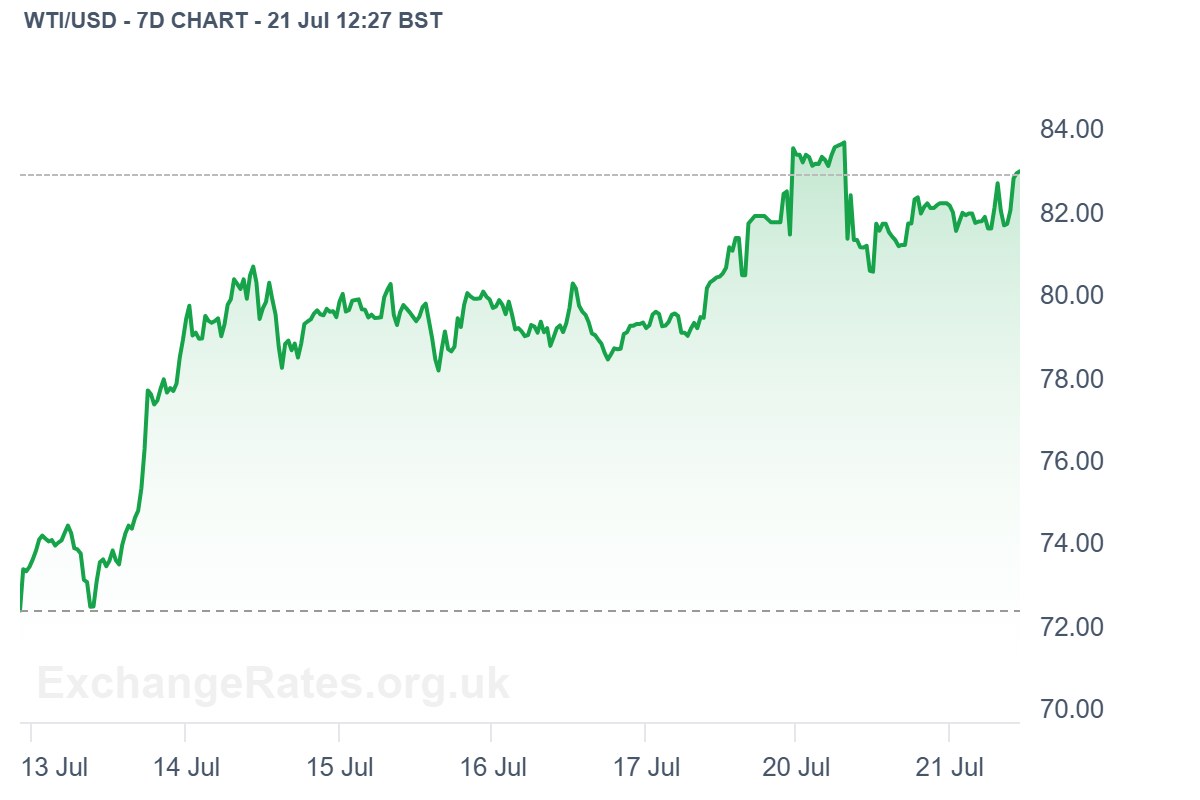
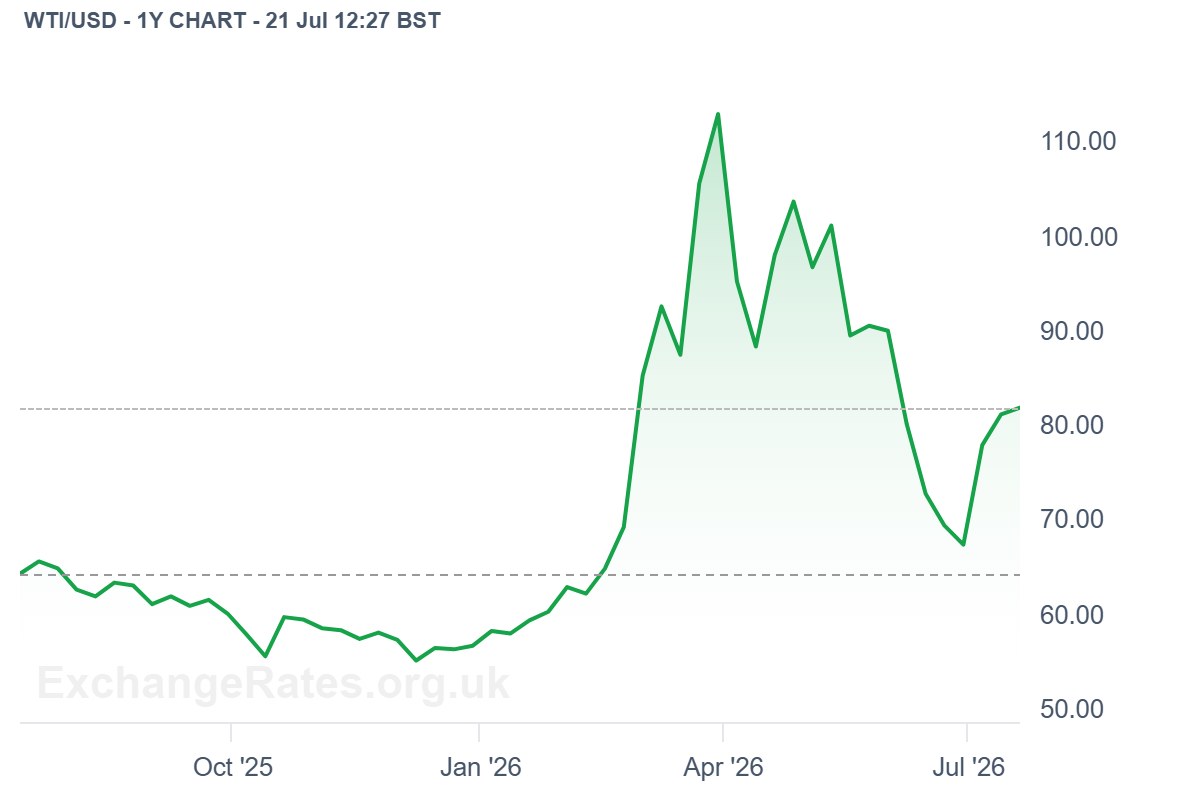
Crude oil (OIL/USD) traded near $83.24 on Tuesday, having risen almost 17% from early July lows of around $71. Market participants remain focused on renewed tensions between the United States and Iran, along with mounting pressure across global refined fuel markets.
Although Brent crude has returned above $85 per barrel, Bank of America argues that headline oil prices do not fully reflect the stress developing across the global energy market.
According to the bank, crude supply remains relatively comfortable despite major disruptions in the Middle East and Ukrainian attacks on Russian energy infrastructure. Strategic petroleum reserve releases and weak refinery demand have helped prevent a stronger rise in crude prices. However, Bank of America sees a more serious warning in refined products, where diesel and gasoline margins have climbed to, or close to, record levels.
The bank believes the next major move in oil prices will depend largely on how long disruption near the Strait of Hormuz persists.
If tensions remain elevated for several weeks, Brent crude could move above $100 per barrel again. However, a rapid reopening of the Strait of Hormuz could push the market back into surplus. In that scenario, rising crude supplies could exceed refinery demand and trigger a sharp decline in oil prices.
Bank of America also warns that if refinery capacity remains limited while crude production recovers, fuel prices may need to rise further to reduce consumption.
Near-Term Oil Price Forecast: Refinery Bottlenecks Matter More Than Crude Supply
Bank of America estimates that global crude inventories are sufficient to absorb several weeks of disruption, provided additional energy infrastructure is not damaged. The more urgent problem is the refined fuel market.
If refinery outages continue and Middle Eastern fuel exports remain restricted, diesel and jet fuel prices could rise further even if crude oil remains relatively well supplied. According to the bank, this combination could eventually weaken fuel demand and slow economic activity unless geopolitical tensions begin to ease.
