

The pair is testing the 1.1650 level for a potential breakout, as forex traders analyze Germany’s latest foreign trade data showing exports fell by 0.5% after –0.6% in the previous month (vs. a forecast of +0.3%), while imports dropped by 1.3% after –0.1% (vs. expectations of –0.5%). This improved Germany’s trade surplus from €14.7B to €17.2B, above the expected €15.2B. Meanwhile, markets are closely watching France’s deepening political crisis, which threatens to undermine confidence in the entire EU. Last week, Prime Minister Sébastien Lecornu — the fifth to resign in two years — stepped down after less than a month in office.
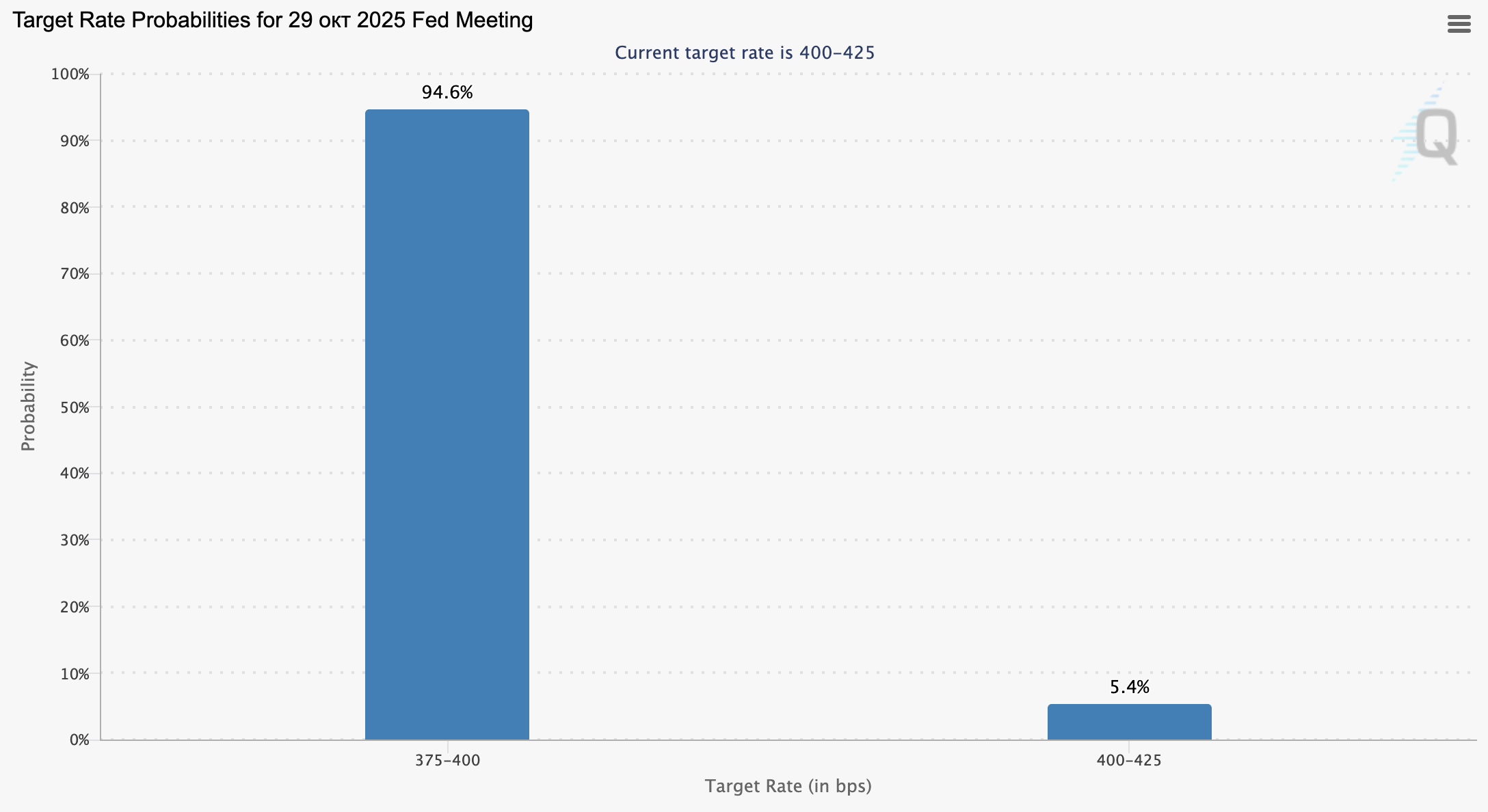
President Emmanuel Macron has yet to comment, though he previously stated he would not resign before the 2027 elections. Another drag on the euro is weak German industrial output, pressured by deteriorating economic conditions and rising U.S. import tariffs: monthly production fell from +1.3% to –4.3% (vs. a forecast of –1.0%), and annual output declined from +1.5% to –3.9%. Meanwhile, the U.S. dollar faces pressure after the release of the Fed’s September meeting minutes, which showed most FOMC members support further rate cuts amid a weakening labor market and easing inflation. According to CME FedWatch Tool, the probability of a 25-basis-point rate cut in October is about 95%.
GBP/USD
The pound strengthens in the GBP/USD pair during the morning session, rebounding from earlier declines and testing 1.3415 for a potential breakout. Bullish sentiment was fueled by the Fed minutes, which reinforced expectations of additional rate cuts before year-end. The regulator is likely to trim rates by 25 basis points in October, with another reduction possible in December. Analysts also expect an acceleration in monetary easing, which could further weigh on the U.S. dollar.
Another negative factor for the dollar is the ongoing U.S. government shutdown, which continues to hurt GDP and increase political instability. Earlier this week, the Senate again failed to pass the temporary funding bill, raising the risk of mass layoffs announced by President Donald Trump. Meanwhile, the Bank of England’s Financial Stability Report highlighted that stock markets are near record highs due to strong Q2 tech earnings and a surge in AI-related investment. However, it warned of an elevated risk of a “sharp market correction,” noting that current valuations — especially in the AI sector — appear overstretched. Today’s UK housing data had little market impact: the RICS House Price Index improved slightly to –15% in September from –19% previously, better than expectations of –18%.
AUD/USD
The Australian dollar shows moderate gains in AUD/USD during the Asian session, continuing a weak corrective move formed the previous day. The pair is testing 0.6600 for a potential breakout while traders await new catalysts. Support came from the Melbourne Institute inflation gauge, which showed expectations for the next 12 months rising from 4.7% to 4.8%, possibly discouraging the Reserve Bank of Australia (RBA) from further rate cuts.
Investors also reacted to New Zealand’s surprise 50-basis-point rate cut to 2.50% (vs. expectations of –25 bps). On Friday, RBA Governor Michele Bullock is expected to speak about inflation and policy direction. Meanwhile, the U.S. dollar remains under pressure from the dovish Fed minutes indicating most FOMC members now favor continued easing due to labor market cooling and slowing inflation. According to the CME FedWatch Tool, the probability of a 25-basis-point rate cut in October is 95%, with another in December likely.
USD/JPY
The U.S. dollar is slightly down against the yen, retreating from the February 14 highs tested yesterday. The USD/JPY pair is now testing 152.50 on the downside as investors sell the dollar after the dovish Fed minutes. The Fed cut rates by 25 basis points in September and hinted at further easing. However, Chair Jerome Powell later cautioned markets against expecting prolonged cheap credit, emphasizing a data-driven approach. Still, most FOMC members currently support continued policy easing, and analysts forecast another 25-basis-point cut in October, with nearly 100% probability, and a similar move in December if labor data disappoint again.
The September U.S. labor report was not published due to the ongoing shutdown, as Congress remains divided over the budget. Earlier this week, the Senate once again rejected a temporary funding bill. Traders now expect increased pressure from President Trump’s administration, which has threatened mass layoffs if the budget remains unresolved. Meanwhile, the yen remains under pressure following Sanae Takaichi’s victory in the Liberal Democratic Party leadership race. Expected to be confirmed as Japan’s first female Prime Minister on October 15, she supports looser fiscal policy — a potential obstacle for the Bank of Japan’s tightening plans. Her stance on military strengthening and national sovereignty could also heighten regional tensions.
XAU/USD
The XAU/USD pair consolidates near 4040.00, maintaining upside potential. Gold remains supported by political uncertainty in the EU — particularly in France, where Prime Minister Sébastien Lecornu recently resigned — and growing criticism of President Macron. The European Commission’s focus on military spending amid declining social investment adds to regional risks. Uncertainty also stems from the prolonged U.S. government shutdown, which may continue for weeks. With expectations of further Fed easing, gold could gain additional momentum in October.
