


Top Pick
- Fully licensed and regulated US exchange
- Strong focus on security and compliance
- User-friendly interface for beginners
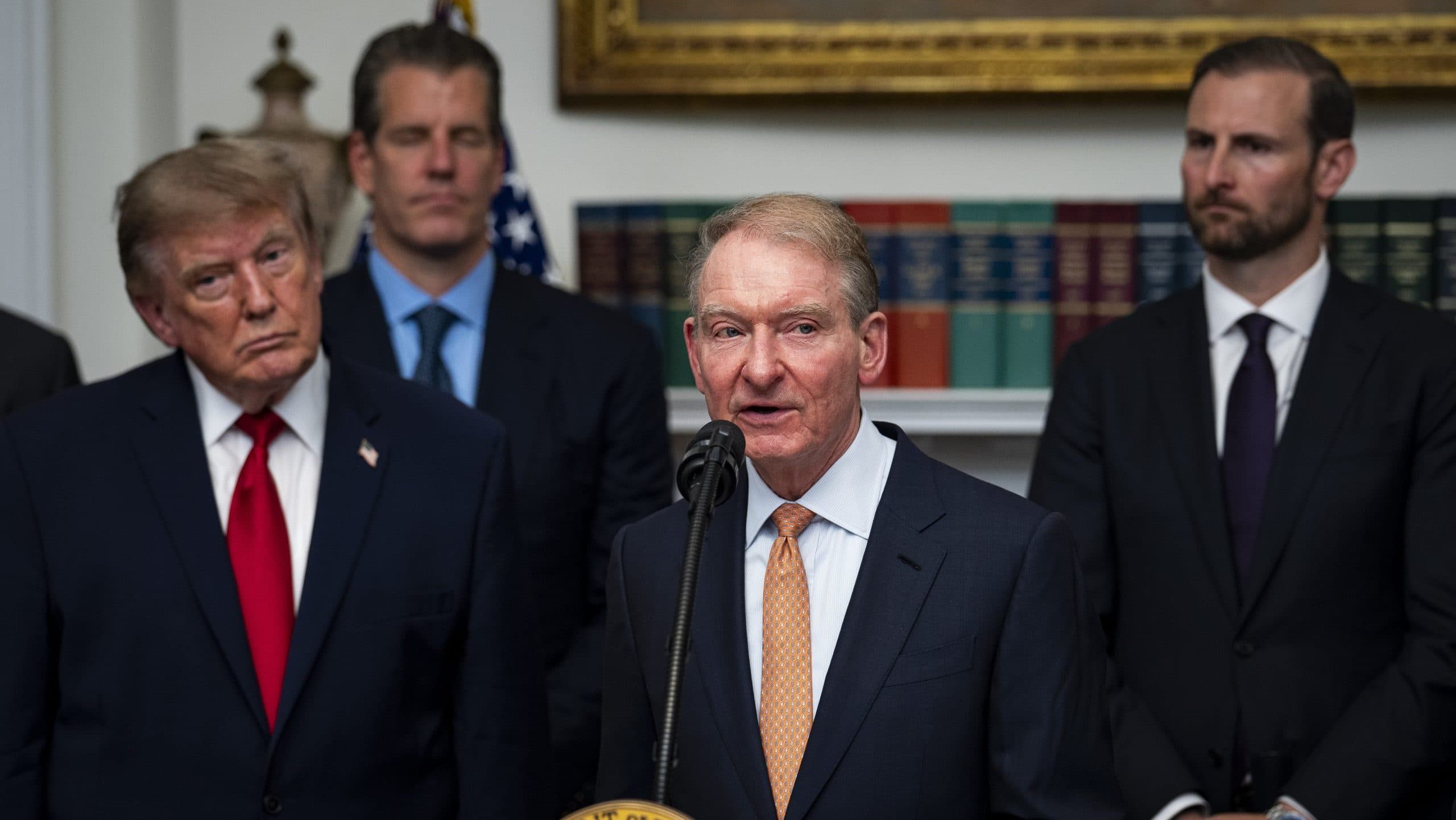
Six major blockchain organizations are calling on the US Securities and Exchange Commission (SEC) to make its classification of digital commodities part of binding crypto regulations. The proposal could affect how exchanges and investors handle tokens such as LINK, ADA, HBAR, APT, AVAX and XLM, particularly when these assets are traded on secondary markets.
 By Andrew Bennett
 The administration of U.S. President Donald Trump is reportedly considering turning dollar-denominated stablecoins into a foreign financial-policy tool by supporting projects overseas, expanding the use of the U.S. currency and creating additional demand for U.S. government debt.
 By Andrew Bennett
 Early on September 25, 2026, the cryptocurrency community detected a series of unusual transactions originating from the Bitget exchange.
 By Andrew Bennett
 This week, gains in leading digital assets gave way to a decline, leaving BTC trading at 84000.00 (+3.7%), ETH at 2670.00 (+1.5%), USDT at 0.9997 (+0.07%), BNB at 770.00 (+0.4%) and XRP at 1.5300 (+8.9%) at the time of the review. Total market capitalization reached $2.87 trillion, while Bitcoin’s market share decreased to 58.8%. Meanwhile, net inflows into Bitcoin ETFs amounted to $2.251 billion, while Ethereum ETFs attracted $602.8 million.
 By John Isige
 Kelp DAO’s developer has sued LayerZero and CEO Bryan Pellegrino, alleging that failures in LayerZero’s infrastructure enabled the rsETH bridge exploit and seeking compensation for financial and reputational damage.
 By Andrew Bennett
 US futures brokers and derivatives clearing organizations may invest customer funds in tokenized versions of eligible assets, provided existing regulatory requirements are met.
 By Andrew Bennett
 Grayscale's Zcash ETF is preparing for a 3-for-1 share split less than a month after its NYSE Arca debut, as strong investor inflows coincide with a sharp rally in ZEC and record activity across the Zcash mining network.
 By John Isige
 Arc now allows users to transfer assets and use the USDC stablecoin to pay transaction fees, while Circle is exploring a transition to Proof-of-Stake and a possible future role for the ARC token.
 By John Isige
 The CLARITY Act failed to clear a procedural vote in the US Senate, leaving efforts to create a comprehensive regulatory framework for the cryptocurrency market at an impasse.
 By John Isige
 South Korea is facing renewed calls to postpone its cryptocurrency tax for a fourth time. A petition seeking another two-year delay has gathered enough signatures to be considered by a parliamentary committee.
 By Andrew Bennett
 Balancer is reportedly considering shutting down after several unsuccessful restructuring attempts and distributing at least $9 million in treasury assets to BAL holders before dissolving the DAO.
 By Andrew Bennett
 Cryptocurrency exchange CoinEx has announced that it will shut down after nearly nine years of operation. Users have until December 22, 2026, to withdraw their assets.
 By Andrew Bennett
 US senators have released the latest revised version of the CLARITY Act as lawmakers seek to secure an agreement before the procedural vote scheduled for September 15.


For crypto, the framework is similar to traditional financial markets but comes with its own twist. Here, price action turns on liquidity, adoption, regulation, and flows from institutions alongside retail sentiment. Network health—hash rate, staking, active wallets—adds another layer. Macro still matters too: rates, dollar strength, and risk appetite shape inflows and outflows. Then, as with any market, you use the chart—trend, support and resistance, momentum, and volume—to spot setups and manage risk.