
Top Pick
- Fully licensed and regulated US exchange
- Strong focus on security and compliance
- User-friendly interface for beginners

The cryptocurrency market strengthened earlier this week but came under sharp selling pressure on Thursday, erasing much of its previous gains. In the latest market snapshot, Bitcoin (BTC) is trading near 81600.00 (+0.9%), Ethereum (ETH) at 2400.00 (+2.1%), Tether (USDT) at 0.9991 (–0.01%), BNB at 744.00 (+5.1%) and XRP at 1.3250 (+4.8%). Total cryptocurrency market capitalization has declined to approximately $2.73 trillion, while Bitcoin dominance has increased to 60.0%. From October 19 to 22, US spot Bitcoin ETFs recorded net inflows of $439.1 million, while Ethereum ETFs saw outflows of $225.1 million. The market remains volatile despite the recovery attempt discussed in our previous crypto weekly review.

 By John Isige
 As previously proposed, Japan’s parliament has approved amendments that officially classify cryptocurrencies as financial assets rather than merely a means of payment. The reform opens the way for spot Bitcoin ETFs, major tax changes and stricter regulatory standards modelled on the securities market.
 By John Isige
 The pair has continued to form a new uptrend since the beginning of last month. However, the price has now reversed from 81.25 (Murray level [6/8]) and is attempting to develop a downward correction. The key level for sellers remains 75.00 (Murray level [4/8]), located below the middle line of the Bollinger Bands. A breakdown below this mark could signal a reversal of the current uptrend and trigger a decline towards 68.75 (Murray level [2/8]), 62.50 (Murray level [0/8]) and 56.25 (Murray level [-2/8]). The most important level for buyers remains 81.25 (Murray level [6/8]). A consolidation above it could lead to renewed growth towards 93.75 (Murray level [+2/8]) and 98.40 (the area of three-month highs). Technical indicators suggest that the pair may continue rising. The Bollinger Bands are directed upwards. The MACD histogram is declining but remains in positive territory. The Stochastic oscillator has reversed upwards from the oversold zone. It is also worth noting that the weekly chart shows an attempt to reverse the long-term downtrend. The Bollinger Bands have turned horizontal after declining, while the Stochastic oscillator has reversed upwards. This makes a renewed rise in prices more likely.
 By John Isige
 South Korea plans to overhaul its 76-year-old national asset management system to formally include cryptocurrencies within the scope of state-owned assets.
 By Andrew Bennett
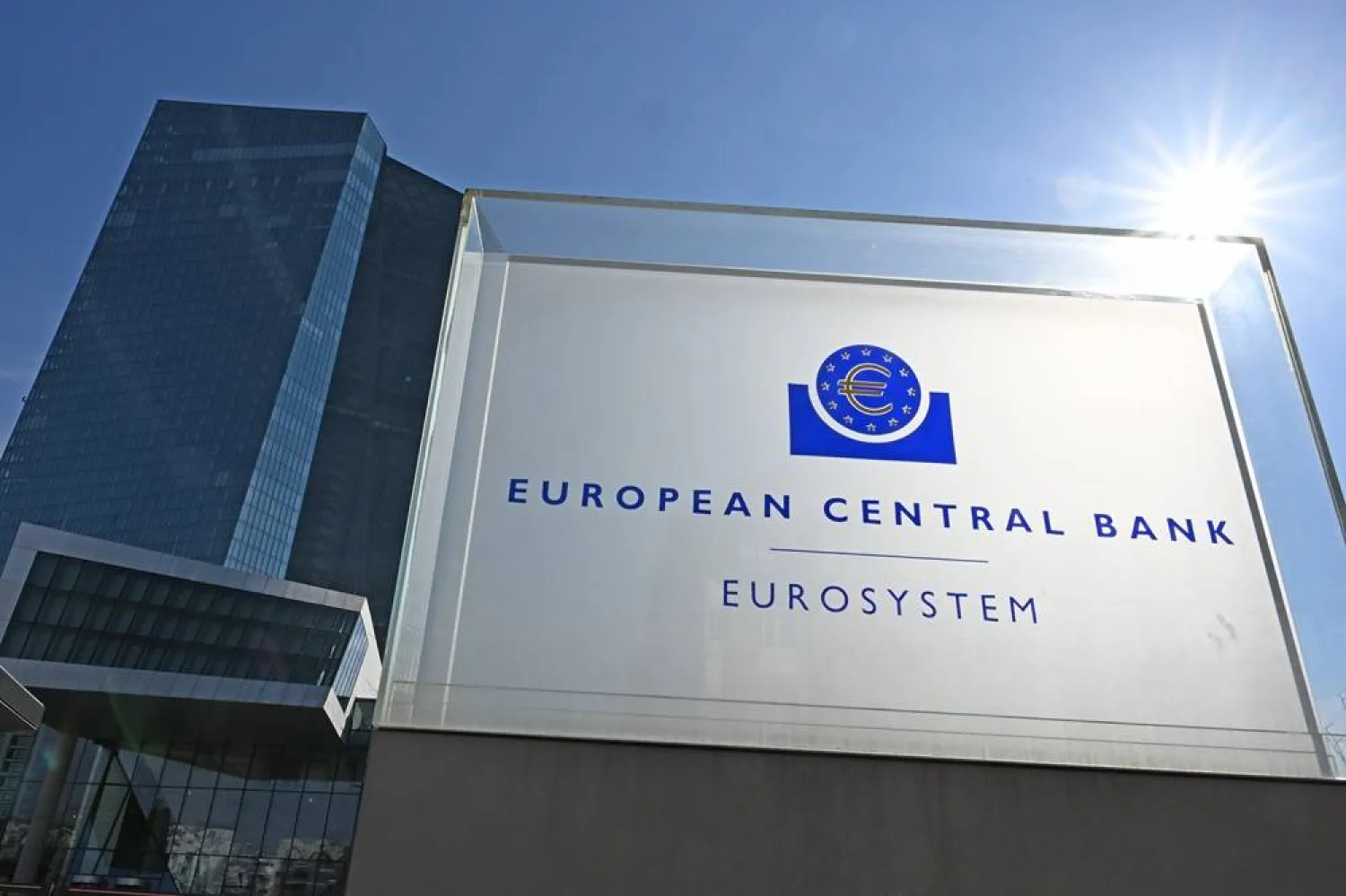
 The European Central Bank (ECB) has announced a list of 36 banks and payment companies selected to participate in the digital euro pilot programme, marking the most significant step in Europe’s CBDC project since its launch.
 By John Isige
 This week, the XRP/USD pair has shown mixed dynamics, in line with the broader market trend. Yesterday, the price recovered its previous losses and reached the 1.1200 mark following the release of US inflation data.
 By Andrew Bennett
 The Ethereum Foundation is continuing its largest restructuring in years by spinning out its institutional privacy research unit into an independent company called EthSystems.
 By John Isige
 Superteam Vietnam has launched the “Bring Your Web2 Idea Onchain” competition, inviting participants to bring Web2 business ideas to the Solana blockchain to solve real-world commercial problems.
 By Andrew Bennett
 Galaxy Digital has launched the Galaxy Onchain Financing Rate, or GOFR, a fully managed on-chain financing programme designed for financial institutions, high-net-worth individuals and accredited investors.
 By John Isige
 Velocity has raised $38 million in a Series A funding round to expand its stablecoin infrastructure for businesses and financial institutions.
 By John Isige
 Since the beginning of the current month, the pair has been attempting to resume growth and reverse the long-term downtrend. Yesterday, the price reached a four-month high near 1843.00 but later gave up part of its gains and is now trading close to the 1750.00–1700.00 support zone (Murray level [2/8], the middle line of the Bollinger Bands).
 By John Isige
 On July 14, SBI Holdings announced that its blockchain joint venture will officially change its name from SBI R3 Japan to SBI Solana Global. The Solana Foundation will also join the company’s shareholder structure alongside SBI Holdings and Sumitomo Mitsui Financial Group (SMFG), one of Japan’s three largest megabanks.
 By John Isige
 According to La Razón, Bolivia’s Minister of Economy José Gabriel Espinoza Yáñez said the government is assessing the possibility of making USDT an official payment method in the economy. However, he stressed that the process would be carried out with extreme caution, as Bolivia remains in the “grey zone” of the Financial Action Task Force (FATF) for anti-money laundering and counter-terrorist financing compliance.


For crypto, the framework is similar to traditional financial markets but comes with its own twist. Here, price action turns on liquidity, adoption, regulation, and flows from institutions alongside retail sentiment. Network health—hash rate, staking, active wallets—adds another layer. Macro still matters too: rates, dollar strength, and risk appetite shape inflows and outflows. Then, as with any market, you use the chart—trend, support and resistance, momentum, and volume—to spot setups and manage risk.